
Help your child put feelings into words
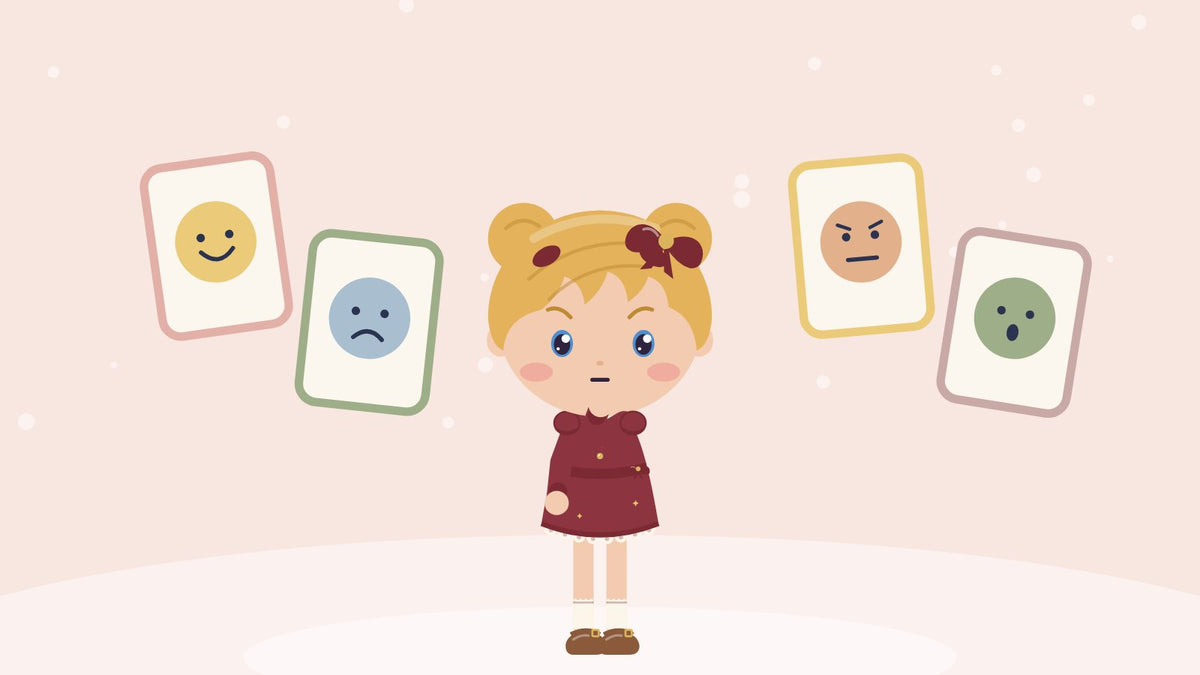
Happy, sad, angry, scared. Most children know the big four. But between them lie lots of nuances: disappointed, nervous, proud, embarrassed, jealous, excited. The more words a child has, the easier it gets to understand themselves and to tell others what’s wrong.
Start with your own feelings
Say out loud how you feel: “I got a little frustrated when the bus left.” “I’m so looking forward to seeing Grandma.” When grown-ups put words to their feelings, it becomes natural for children to do the same.
Guess the feeling
When you read a book together, stop and ask: “How do you think he feels now? How can you tell?” Picture books are perfect, because the faces show the feelings clearly.
Make faces in the mirror
Stand in front of the mirror together and make a happy face, a surprised face and a grumpy face. It’s fun, and your child learns to recognize what feelings look like.
Use the body
Feelings live in the body. Ask: “Where can you feel it?” Butterflies in the tummy, warm cheeks, a lump in the throat. It helps your child notice the feeling early, before it gets big.
A feelings card a day
Let your child draw a card with a feeling and tell about a time they felt that way. Or use the cards at dinner: “Which card fits your day?” For the littlest ones, it’s easier to point at a picture than to find the word themselves.
All feelings are welcome
The most important thing is for your child to experience that no feelings are wrong. We shouldn’t take away the hard feelings, but help our children carry them. A simple “I can see you’re sad, I’m here” can be enough.
From My Mini Mindset
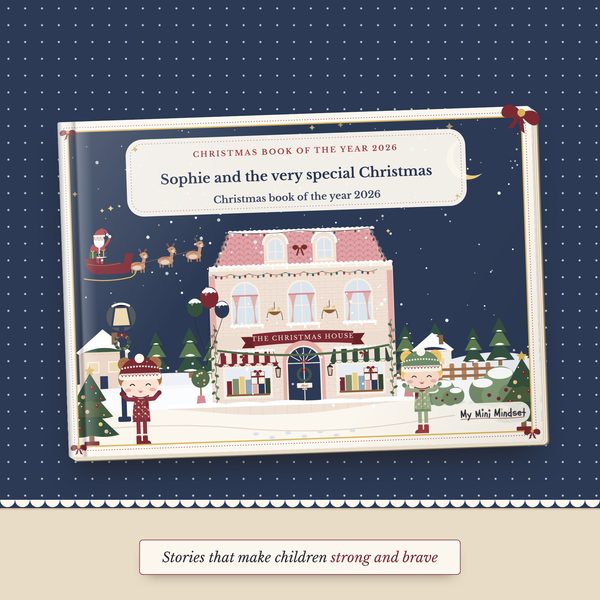
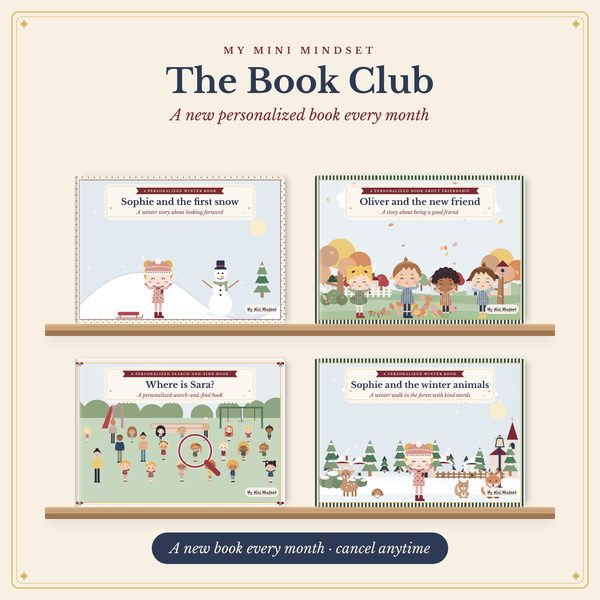
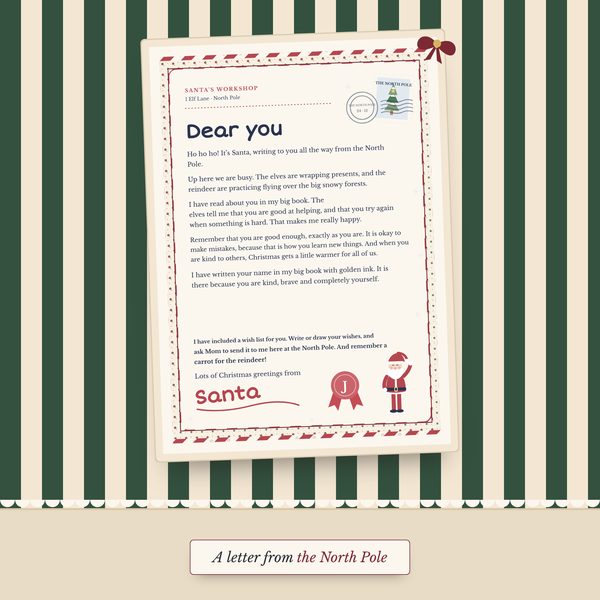
Want to bring the words into everyday life? Here are materials with your child’s name and a figure that looks like your child:
Books that go with this
Get new ideas and free printables
We send a short letter when there are new books and posts.